
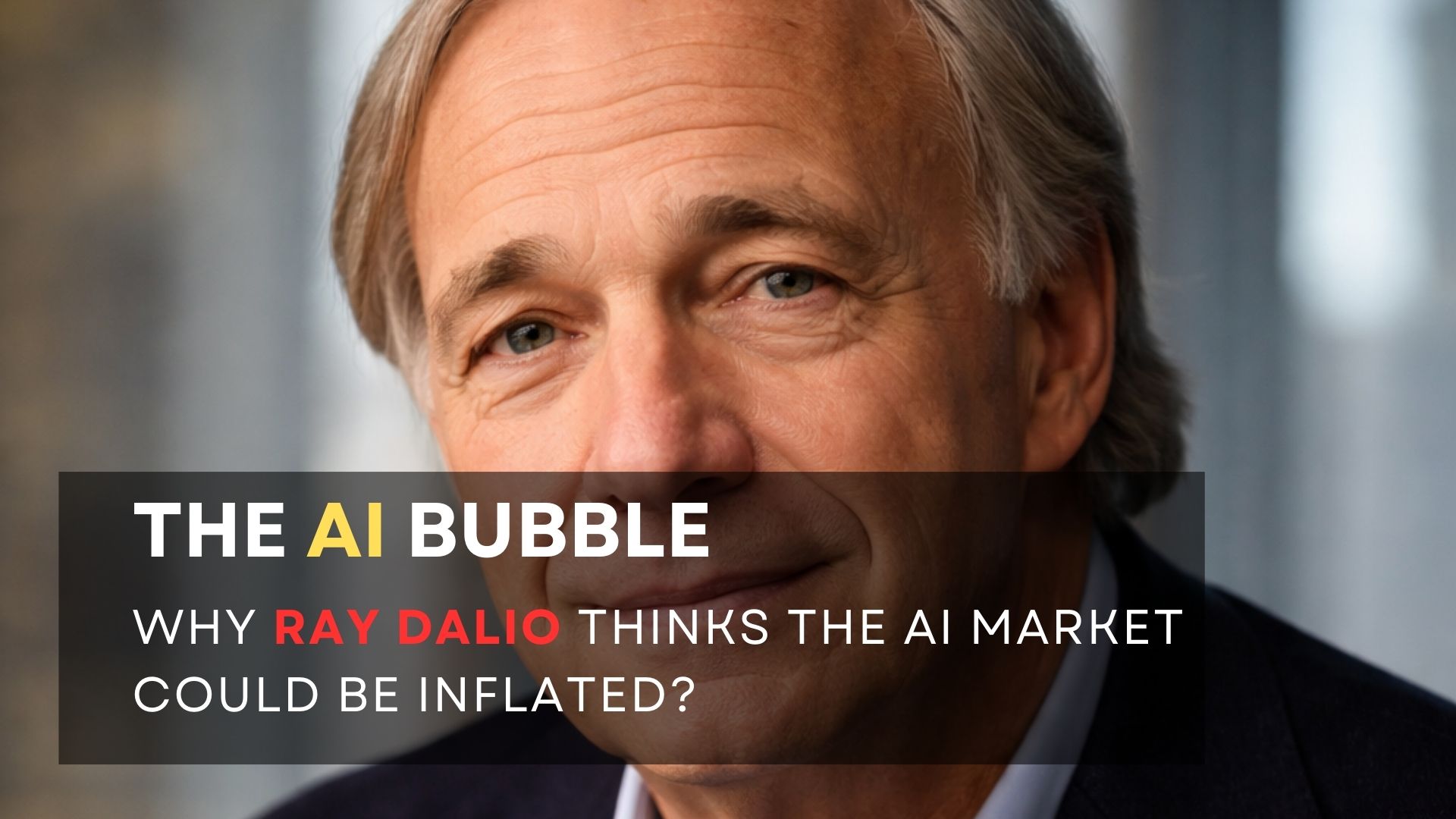
Artificial Intelligence has moved rapidly from a niche research area to the central force driving today’s technology and financial markets. Over the past few years, AI-focused companies—especially those working on generative AI, chips, cloud infrastructure, and automation—have attracted massive investor attention. Stock prices of leading tech firms have surged, venture capital has poured into AI startups, and governments and enterprises alike are racing to adopt AI-driven solutions. This momentum has created what many describe as an AI-driven market boom, reshaping how value is perceived in the global economy.
This topic matters deeply to investors and the broader tech ecosystem because history shows that every transformative technology comes with cycles of over-enthusiasm and correction. For investors, understanding whether the AI boom is grounded in long-term fundamentals or drifting toward speculative excess is crucial for risk management and portfolio strategy. For the tech ecosystem—developers, startups, institutions, and policymakers—the conversation influences funding decisions, innovation priorities, and sustainable growth. Ray Dalio’s cautionary remarks bring an important reminder: while AI’s potential is undeniable, the way markets price that potential can determine who benefits—and who gets hurt—when expectations meet reality.
Who is Ray Dalio?
Ray Dalio is one of the most well-known and respected investors in the world. He is the founder of Bridgewater Associates, a hedge fund he started in 1975 from his small apartment in New York. Over the decades, Bridgewater grew into the world’s largest hedge fund, managing hundreds of billions of dollars for governments, institutions, and large investors. Dalio is known for his deep thinking about markets, economies, and long-term cycles.
Beyond running Bridgewater, Ray Dalio has had a strong influence on global financial thinking. His ideas on economic cycles, debt crises, and diversification are widely followed by investors and policymakers. When Dalio speaks about risks in the market—whether it is debt, inflation, or now artificial intelligence—people listen. His views often shape investor sentiment because they come from decades of experience studying how markets behave during both booms and crashes.
The AI Boom in Recent Years
The rapid rise of artificial intelligence has played a major role in driving global stock markets, especially in the technology sector. Companies involved in AI software, advanced chips, cloud computing, and data infrastructure have seen sharp increases in their valuations. Big tech firms investing heavily in AI have led market rallies, while startups promising AI-based solutions have attracted record levels of funding. For many investors, AI has become the most exciting growth story of this decade.
This boom has also changed how markets behave. A large portion of recent market gains has come from a small group of AI-focused companies, while many traditional sectors have grown more slowly. As money flows toward AI, expectations about future profits have risen very quickly. This imbalance is what has caught the attention of experienced investors like Ray Dalio, who see strong innovation—but also signs of rising risk if expectations grow faster than real business results.
Ray Dalio has cautioned that the current excitement around artificial intelligence may be moving into the early stages of a market bubble. According to him, prices of many AI-related stocks have risen rapidly, largely driven by high expectations about future growth. While he agrees that AI is a powerful and important technology, he believes that markets may be getting ahead of themselves by pricing in too much success too soon.
Dalio’s warning is not a call for panic or immediate selling. Instead, it is a reminder that history often repeats itself in financial markets. New technologies tend to create waves of optimism, followed by periods of correction when reality sets in. Dalio suggests that the AI boom still has room to continue, but investors should remain cautious and avoid assuming that current gains will continue without risks.
In simple terms, a financial bubble happens when the price of an asset rises much faster than its real value. This usually occurs when investors become overly optimistic and start buying based on future hopes rather than current performance. As more people rush in, prices keep climbing, creating a cycle driven by excitement and fear of missing out.
Eventually, bubbles tend to slow down or burst when expectations are not met. This can happen due to higher interest rates, weaker earnings, or changes in investor confidence. Ray Dalio’s concern is that while AI will clearly shape the future, some investments may be priced at levels that are hard to justify in the short term. Understanding what a bubble looks like helps investors stay grounded and make more balanced decisions during fast-moving market trends.
Why Dalio Thinks the AI Bubble Could Continue
Despite his warning, Ray Dalio does not believe the AI boom will collapse immediately. He points out that bubbles often last longer than people expect, especially when supported by strong narratives and favorable economic conditions. Right now, artificial intelligence is seen as a once-in-a-generation technology, which keeps investor interest high and money flowing into the sector.
Dalio also notes that easy monetary conditions and expectations of lower interest rates can help sustain high asset prices. As long as liquidity remains available and there is no major shock to the system, AI-related stocks may continue to rise. However, his message is clear: continued growth does not mean zero risk. The longer a boom lasts, the more important it becomes for investors to stay cautious and realistic.
Lessons from Past Technology Bubbles
History shows that major technological breakthroughs often come with periods of extreme market enthusiasm. The dot-com boom of the late 1990s is a clear example, where internet companies attracted massive investments despite having weak or unproven business models. When expectations failed to match reality, markets corrected sharply, and many investors faced heavy losses.
Ray Dalio often refers to these historical patterns to explain why caution is necessary. Importantly, past bubbles did not mean the technology itself was useless—the internet went on to transform the world. The lesson is that timing and valuation matter. In the case of AI, the technology is real and powerful, but not every company or stock benefiting from the hype will succeed in the long run.
For investors, Ray Dalio’s message is about balance rather than fear. Artificial intelligence offers strong long-term opportunities, but putting all investments into highly valued AI stocks can increase risk. Diversification—spreading investments across sectors and asset types—remains an important strategy, especially during periods of strong market excitement.
The debate around whether the AI boom is a bubble or a breakthrough is still unfolding. Artificial intelligence is clearly reshaping industries, improving productivity, and opening new possibilities that were unimaginable just a few years ago. At the same time, rapid market gains and rising valuations have created an environment where expectations may be running ahead of actual results.
Ray Dalio’s warning serves as a timely reality check. It does not dismiss AI’s potential, but it reminds us that markets move in cycles and optimism can sometimes turn into overconfidence. For investors, technologists, and policymakers alike, the key takeaway is simple: believe in the future of AI, but approach it with patience, discipline, and a clear understanding of risk.